Are Rose Gold Scissors Just a Gimmick? What's Really Under the Finish
Rose gold scissors get dismissed as a novelty. Here's what the finish actually is, why it doesn't change the cut, and how to tell a real tool from a toy.
It’s the first thing a lot of stylists think when they see a rose gold pair on the bench: nice colour, but is it any good? It’s a fair question — and the honest answer is that the finish has nothing to do with how the scissor cuts.
The finish is a surface, not the blade
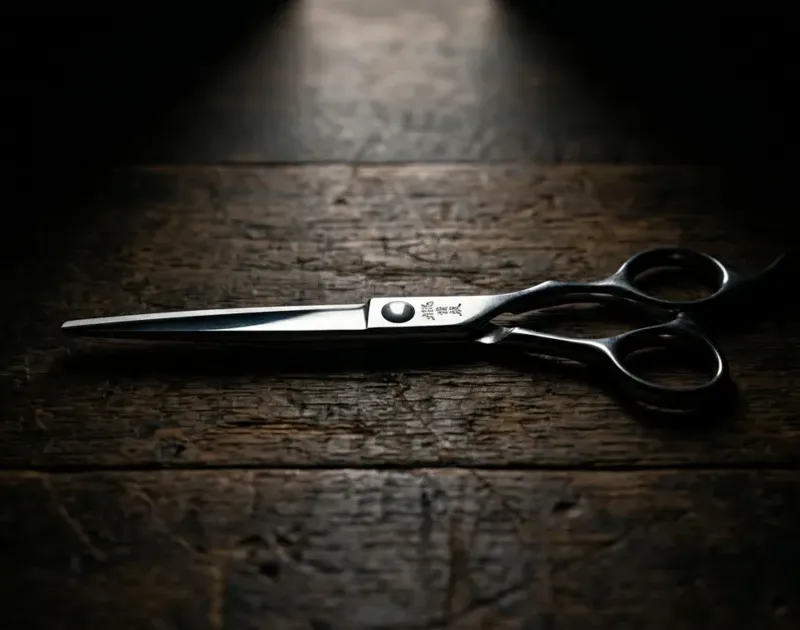
A quality rose gold, gold or coated scissor isn’t painted. The colour is a titanium or PVD (physical vapour deposition) coating, or a plated layer, bonded hard to the steel. The cutting edge is ground into the blade first, then the finish goes on the body. So the geometry that does the cutting — the convex hollow-grind, the bevel, the ride line — is exactly the same as it would be on a plain satin pair.
That’s why you’ll see the same model offered in satin and in rose gold at a similar price: it’s the same scissor underneath.
What actually decides if it cuts well
The things that matter are the same ones you’d check on any scissor:
- Steel. 440C is honest value; VG-10 and cobalt alloys hold a finer edge for longer. We list the grade on every product — see the Finish & Steel Library.
- Edge. A true convex edge slides and slices; a bevel is more robust.
- Tension and pivot. A proper adjustable screw, a smooth ride, no play.
Get those right and the colour is a free upgrade to how your kit looks.
When it is a gimmick
There are cheap lookalikes — a soft coating over poor steel, a fixed rivet instead of a real tension screw, no named steel anywhere. That’s a toy, and no finish saves it. Run anything you’re considering through our authenticity checklist before you buy.
Everything in our rose gold range is curated on the cut first. The colour is the reason you’ll want to be seen using it — not the reason it works.
Stay sharp — join the list
New product drops, maintenance tips, and member-only deals delivered to your inbox.